
Blogs
Explore the Musicolor Method NYC blog for inspiring stories, expert tips, and creative ideas that make music learning fun and engaging.
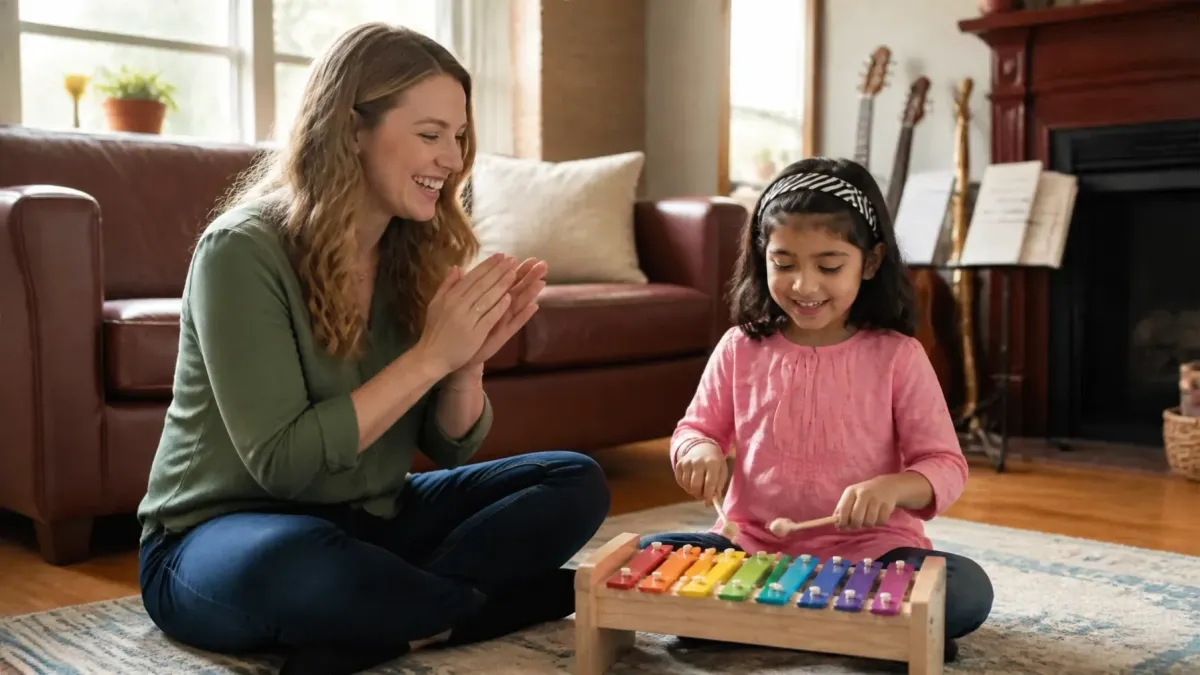
Best Music Lessons For ADHD Kids | Musicolor Method NYC
Explore How Music Lessons for ADHD Kids at Musicolor Method NYC Improve Focus And Attention
For many families in Brooklyn and throughout New York City, choosing the right extracurricular activity for a child with ADHD can feel challenging. Parents often look for something that supports their child’s energy and creativity without creating additional mental fatigue after a full day at school.
For parents of neurodiverse children, the search is often emotional as much as practical. You may have already tried activities that looked great on paper but ended in frustration, shutdowns, or that sinking feeling that your child was being asked to fit into a system not built for them. Many families come to us wanting more than an after-school activity. They want a place where their child can be understood, where movement and curiosity are welcomed, and where progress doesn’t depend on sitting perfectly still.
If you’ve been searching for music lessons for adhd kids, you’ve likely realized that the traditional "sit still and read these black-and-white notes" approach doesn't always click. At Musicolor Method NYC, we do things differently. We believe that music isn't just a skill; it’s a powerful tool for neurodiverse learners to build focus, confidence, and self-regulation.
That’s especially true when lessons are personalized, playful, and taught in a setting where a child feels safe. Through our in-home music lessons Brooklyn families love, as well as flexible online music lessons, we help children engage with music in ways that support their brains instead of fighting against them. In fact, some Brooklyn families may remember us from our earlier days as Park Slope Music Lessons. Today, as Musicolor Method NYC, we continue to offer the same high-quality music education while evolving our approach to better support students of all ages.
Are music lessons good for kids with adhd?
Yes, music lessons are highly beneficial for kids with ADHD. Music provides a structured yet creative environment that naturally engages the brain’s reward system (dopamine). By requiring simultaneous focus on rhythm, melody, and motor coordination, music lessons help strengthen executive functions like working memory, impulse control, and sustained attention. Studies show that active music-making can even improve a child's ability to filter out background noise, which is a common challenge for those with ADHD.
At Musicolor NYC, we take this a step further. Our unique, color-based, and play-focused curriculum is designed to bypass the "bottleneck" of traditional instruction, making the joy of music accessible from day one.
Why Music Lessons for ADHD Kids Work So Well
In a busy city like New York City, children with ADHD can easily feel overstimulated. Structured musical play helps create a sense of calm, focus, and balance in their daily routine.
1. The Dopamine Connection
The ADHD brain often seeks stimulation. Music is inherently rewarding; every time a student hits the right note or masters a rhythm, their brain receives a natural hit of dopamine. This makes music a "high-interest" activity that can sustain their attention longer than many other tasks.
2. Improving "Figure-Ground" Hearing
Many children with ADHD struggle to focus on a teacher’s voice in a noisy classroom. Research has shown that years of musical training help the brain differentiate between important sounds (the "figure") and background noise (the "ground"). This skill translates directly back to the classroom environment.
3. Strengthening Executive Function
Playing an instrument is a full-brain workout. It requires:
Working Memory: Remembering where the fingers go.
Impulse Control: Waiting for the correct beat to strike.
Planning: Sequencing the notes of a song.
4. Time Blindness and the "External Clock"
One common ADHD challenge is time blindness, difficulty sensing how long something lasts, when to start, and how to stay organized in time. Music helps because rhythm acts like an external clock. A steady beat gives the brain something concrete to lock onto. Instead of abstractly feeling that timing is "off," the child can hear and feel exactly where the pulse is.
This matters in a big way for music lessons for adhd kids. Clapping a beat, tapping a drum, or strumming in time helps regulate the brain’s internal timing system. Over time, this can support better pacing, smoother transitions, and more consistent attention. In simple terms, rhythm gives structure to a brain that often experiences time in a more scattered way.
The Musicolor Method: Designed for Inclusion
Our founder, Andrew Ingkavet, developed the Musicolor Method NYC to be "Inclusion by Design." Instead of starting with abstract symbols and complex theory, we start with Kinetic Understanding.
Color-Based Learning
We use a specific color-to-note system. This removes the immediate pressure of reading traditional sheet music, which can be a significant barrier for a music lessons adhd child. When the child sees a red dot and plays the red key, they experience instant success. This builds the "agency" they need to keep going.
Visual Scaffolding for ADHD Brains
For many ADHD learners, traditional music reading asks too much all at once. A child may have to decode note names, track left versus right hand, keep their place on the page, manage posture, listen for pitch, and stay on the beat at the same time. That is a huge executive function load.
Our color-coded system provides visual scaffolding that simplifies the task. Instead of forcing the brain to process multiple abstract symbols at once, we give students clear, concrete cues they can act on immediately. This reduces overwhelm, supports quicker success, and frees up mental energy for listening, timing, movement, and musical expression. In other words, the child spends less effort "decoding the system" and more effort actually making music.
Play-Focused Approach
We don't expect a 5-year-old with ADHD to sit on a piano bench for 30 minutes straight. Our lessons are modular. We might spend five minutes on the piano, two minutes on a rhythm game, and three minutes singing. This "pace-matching" ensures the student stays engaged and never feels "corrected" by a rigid system.
Choosing the Right Instrument for Your Child
Every child is different, but here is how different instruments at Musicolor NYC support ADHD learners:
Piano Lessons
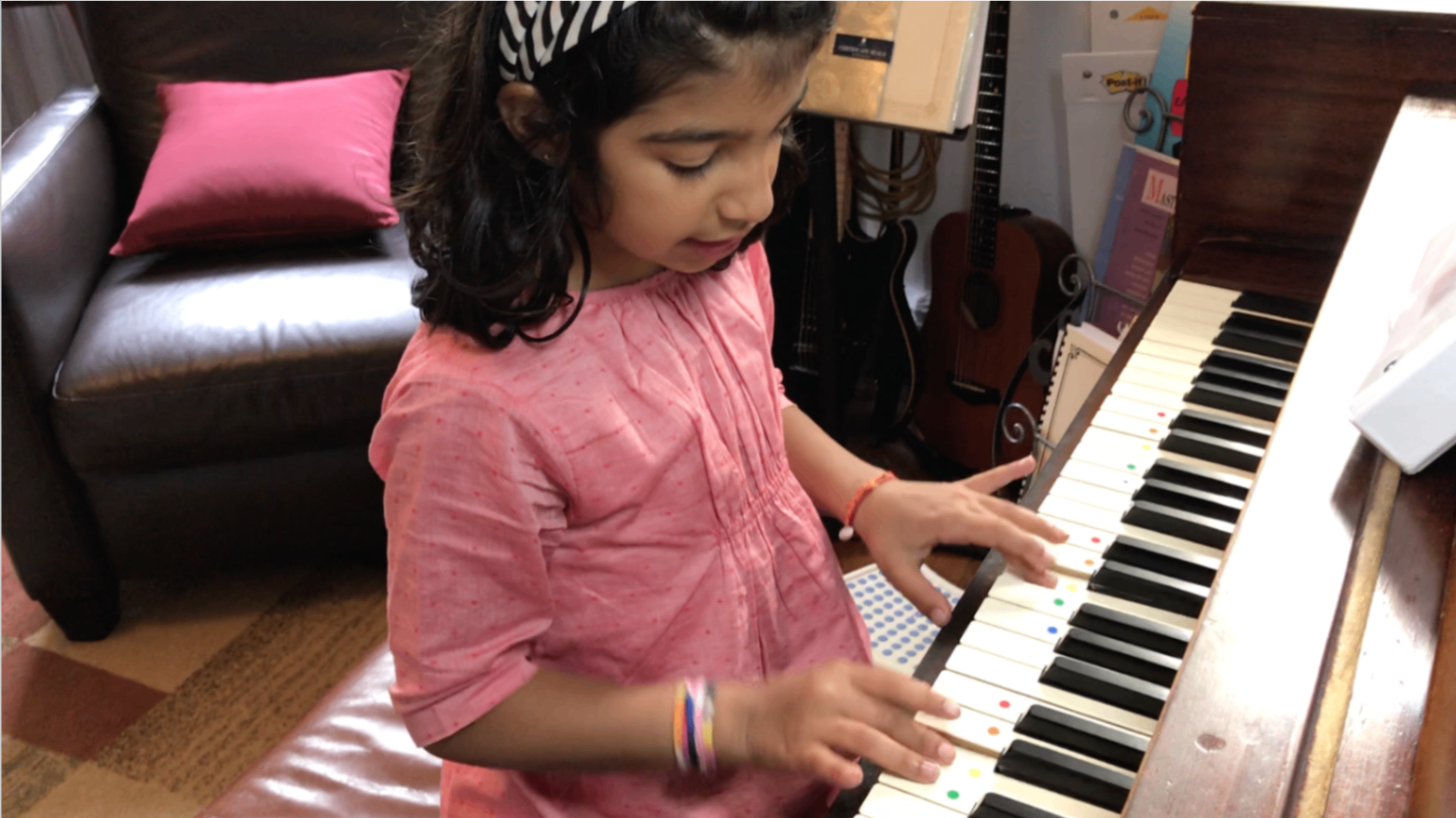
The piano is a visual and spatial instrument. By using piano lessons nyc that feature our color-coded stickers, children can clearly see the patterns. This spatial clarity helps reduce the cognitive load, allowing them to focus on the rhythm and the "feel" of the music.
Guitar & Ukulele
For kids who need to move, the guitar or ukulele is fantastic. It’s a tactile instrument that provides immediate physical feedback. We offer both in-home and guitar lessons in nyc that focus on simple chord shapes and rhythmic strumming, which is great for motor timing.
Drums & Percussion
Drums and percussion are often a wonderful match for kids with ADHD because they are naturally high-stimulus in a productive way. They combine movement, rhythm, sound, and immediate feedback. For a child with lots of physical energy, percussion can provide a healthy outlet while still teaching timing, listening, and self-control.
Voice Lessons
Voice lessons in nyc are incredible for emotional regulation. Learning to control the breath and use the voice helps kids stay "grounded." It’s also a wonderful way for neurodiverse children to express their personalities without the barrier of a physical object between them and the music.
Convenience for Brooklyn & NYC Families
We know NYC life is busy. That’s why we specialize in home music lessons Brooklyn and throughout the five boroughs.
No Commute: We come to you. This creates a safe, familiar environment for your child, which is often where ADHD kids focus best.
Less Sensory Overload: For children with ADHD or ASD, traveling to a new studio can involve traffic, noise, transitions, waiting rooms, and unfamiliar sensory demands. Learning at home removes many of those stress points and helps children start from a more regulated place.
Better Emotional Safety: In a familiar space, kids often show us more of who they really are. That helps teachers adjust the pace, structure, and communication style in real time.
Online Flexibility: We also offer high-quality online music lessons for families on the go or those outside our physical service area.
Vetted Teachers: Our team of 20+ teachers is specifically trained in the Musicolor Method NYC and background-checked for your peace of mind.
Ready to Start Your Musical Journey?
If you’re looking for music lessons for adhd kids that actually work, we invite you to join the Musicolor NYC family. We focus on the whole child, nurturing their unique potential through a love of music.
Whether you know us as Musicolor Method NYC or from our earlier days as Park Slope Music Lessons, our goal has always been the same, to support every child’s unique learning journey.
Don’t wait for the "perfect" time: start today with a free consultation!
Book Your Free Consultation Call Here
Let’s turn "distraction" into "creative action" together.
FAQ: Music Lessons and ADHD
Q1: How do music lessons help a child with ADHD?
Ans: Music lessons provide a structured "external clock" (the beat) that helps ADHD brains regulate timing. They also improve executive functions by requiring the brain to plan, sequence, and execute complex movements while monitoring sound.
Q2: What if my child can't sit still during a lesson?
Ans: That is completely okay. Our teachers use short segments, movement breaks, rhythm games, and varied activities to match a child’s attention span. Especially in home music lessons Brooklyn families book with us, being in a familiar space often makes it easier for children to stay engaged without pressure.
Q3: What is the best instrument for an ADHD child?
Ans: There is no single "best" instrument, but many parents find success with the piano (due to its visual nature) or drums/percussion (due to the high rhythmic engagement). The best instrument is ultimately the one the child is most excited about!
Q4: Do you offer lessons in Spanish?
Ans: Yes! Many of our teachers are bilingual, and we are happy to accommodate Spanish-speaking families. (Ofrecemos clases de música en español para familias en Nueva York).
Q5: Do you offer online options for neurodiverse learners?
Ans: Yes. We offer online music lessons for families who need more flexibility or prefer virtual learning. Many students do very well online when lessons are interactive, visual, and paced to their needs.


You’re not just introducing music, you’re helping your child grow confidence, focus, and joy for life. Welcome to the Musicolor Movement.
Programs
For Schools
For Kids
For Adults
For Seniors
© 2007 - 2026 - 300 Monks, LLC, dba as Musicolor Method. All rights reserved. Unauthorized use prohibited. Privacy Policy